Mirror Trading Manager Pro – Available for Sale! 🚀
Take your copy trading to the next level with Mirror Trading Manager Pro! Manage multiple master and follower accounts, enjoy high-speed trade synchronization, and access advanced features designed for professional trading environments. mt4 and mt5 and ctrader and ..
An automated trading solution designed to analyze financial markets and execute trades using algorithmic strategies. crypto
NewHopeCrypto
An automated cryptocurrency trading system for crypto exchanges, supporting spot and futures trading with AI-driven market analysis and trading strategies.
NewHopePro
A professional multi-platform trading system supporting MT4/MT5, cTrader, FIX API, web-based trading and other integrations, with configurable trading strategies and fast execution.
NewHopeTraderPro
An advanced automated trading platform based on the New Hope Trader system, designed for fast market-data processing, strategy execution and automated order management. New Hope’s documentation describes its Trader system as connecting to trading accounts and fast quote sources, with selectable strategies.
SpeedClicker
A high-speed trading automation tool designed to interact with web-based trading interfaces by automating clicks and order-entry actions.
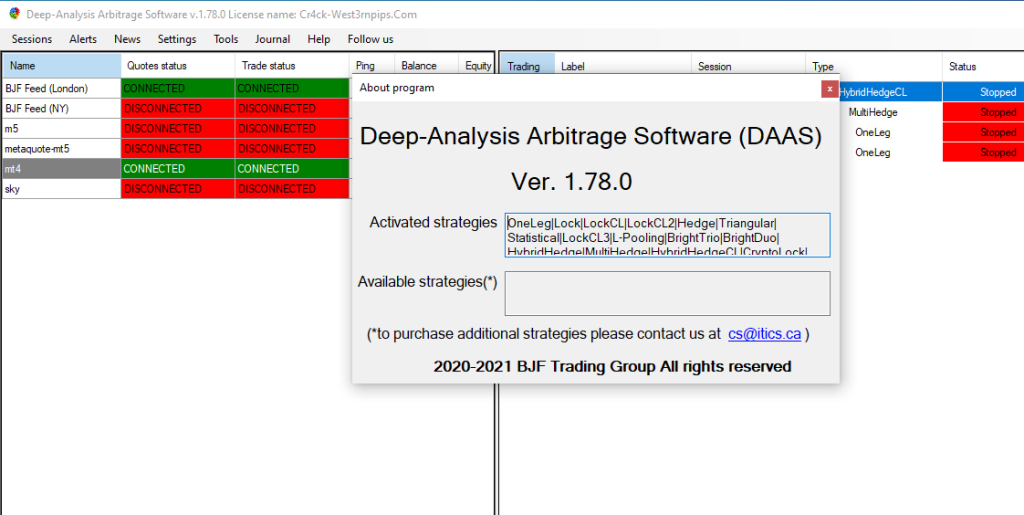
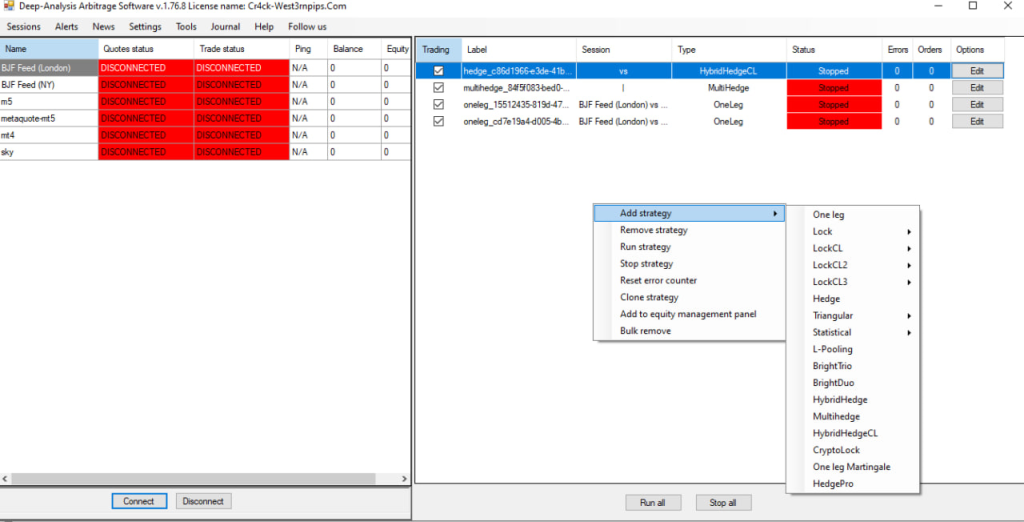
⚡ SharpTrader price 500$ — Professional Arbitrage Trading Software
SharpTrader is an advanced trading terminal designed for Forex and cryptocurrency arbitrage.
It supports strategies such as Latency Arbitrage, Lock Arbitrage, Hedge Arbitrage, Statistical Arbitrage, Triangular Arbitrage, and Pairs Trading.
🔹 Connect multiple brokers and exchanges 🔹 Analyze price differences in real time 🔹 Automate arbitrage strategies 🔹 Build custom strategies with C# 🔹 Support for Forex & Crypto markets
SharpTrader — Find the price difference. Execute the opportunity.
In high-frequency trading (HFT), your “edge” comes from reacting to these microsecond-level dynamics faster and smarter than competitors.
So the challenge isn’t just prediction — it’s prediction under latency + noise + regime change.
🧠 2. Should You Use ML for HFT?
Short answer: ✅ Yes — ML can help with pattern detection, classification, microstructure understanding, ❌ But not every ML method fits real HFT constraints (latency, stability, slippage).
You don’t want a 100-million-parameter Transformer doing inference while your competitor executes in 200 µs.
So: Use ML carefully, focusing on fast, robust, interpretable models.
🔬 3. ML Models That Actually Work in Market Microstructure
Here’s what top proprietary firms and academic papers use effectively:
Rank
Model
Why It Works
🥇 Temporal Convolutional Networks (TCN)
Captures short-term temporal dependencies; faster than LSTMs; can process dense tick data.
Predict short-term price direction / order imbalance
🥈 LSTM / GRU (lightweight)
Sequential pattern modeling; works well if trained on event-based data.